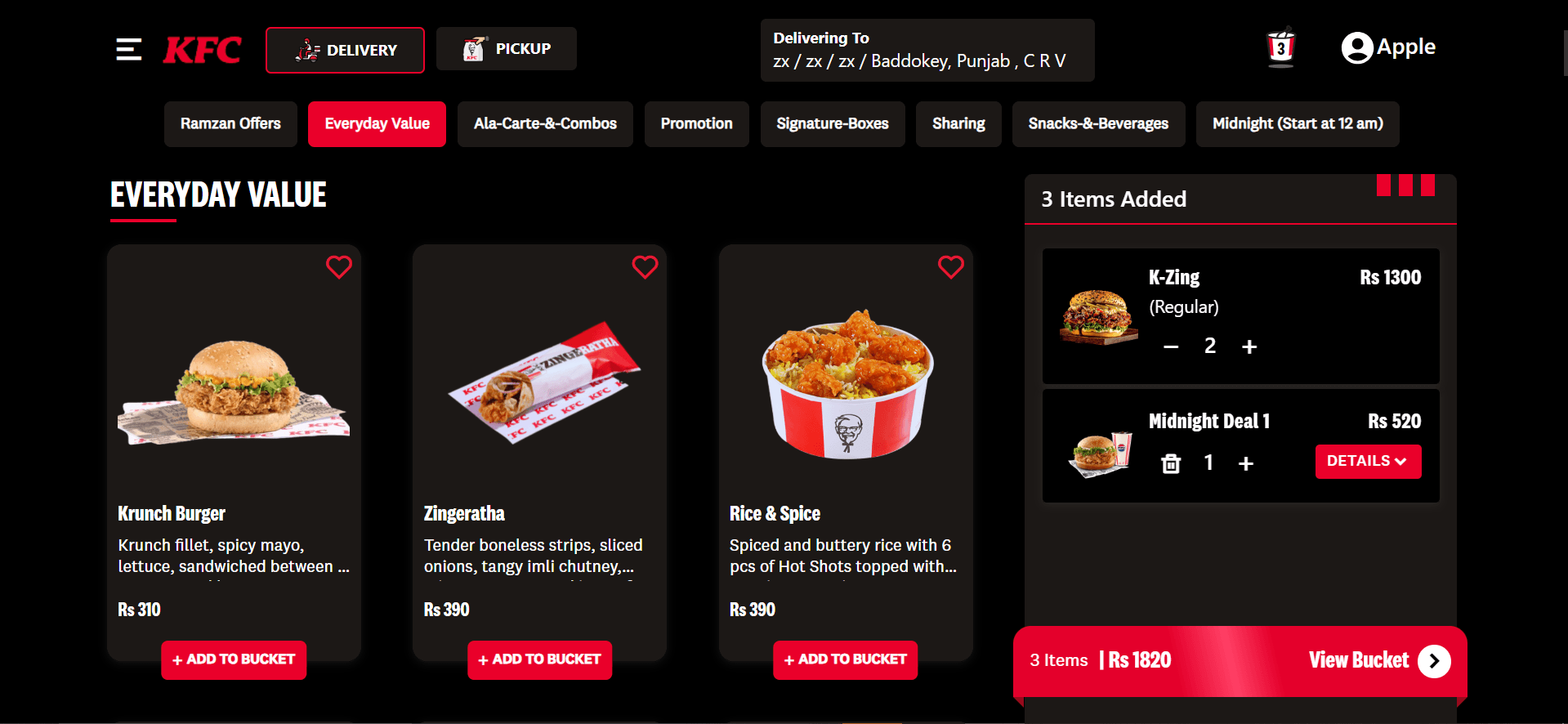
Food ordering · Web + Mobile app
KFC Pakistan
End-to-end functional and performance testing for a high-traffic ordering platform that supports 100K+ concurrent users.
- Functional
- End-to-end
- Regression
- Performance
Open to Senior SQA Engineer roles
I test web and mobile products end to end, so releases ship stable and real users never meet the bugs.

Platforms I've tested


What I do
Thorough, requirement-driven manual testing is the core of my work. API, performance and automation testing support it.
This is the core of my work. I manually test web and mobile applications against business requirements, covering critical user journeys such as browsing, customization, cart, checkout, payment and order tracking.
I protect existing functionality while new features ship. Before anything goes to production it passes smoke, sanity and full regression cycles and gets a QA sign-off.
Defects I log are clear and reproducible, prioritized with the team and tracked through to closure, so developers can fix them fast and nothing slips through.
Supporting skills
I validate APIs and third-party integrations, using system and application logs to confirm data moves correctly between services.
I build load scenarios in Apache JMeter to see how the backend behaves under different user loads and to find bottlenecks before peak traffic does.
Automation supports my manual testing. I use Cypress to take repetitive regression checks off the manual cycle, and I am currently learning Playwright with AI-assisted testing.
Featured QA work
High-traffic ordering systems tested on web and mobile app, and an enterprise smart-city web platform.
Food ordering · Web + Mobile app
End-to-end functional and performance testing for a high-traffic ordering platform that supports 100K+ concurrent users.

Smart city & public services · Web
QA lead and Application Management Support (AMS), with third-party integration testing and log analysis across connected services.
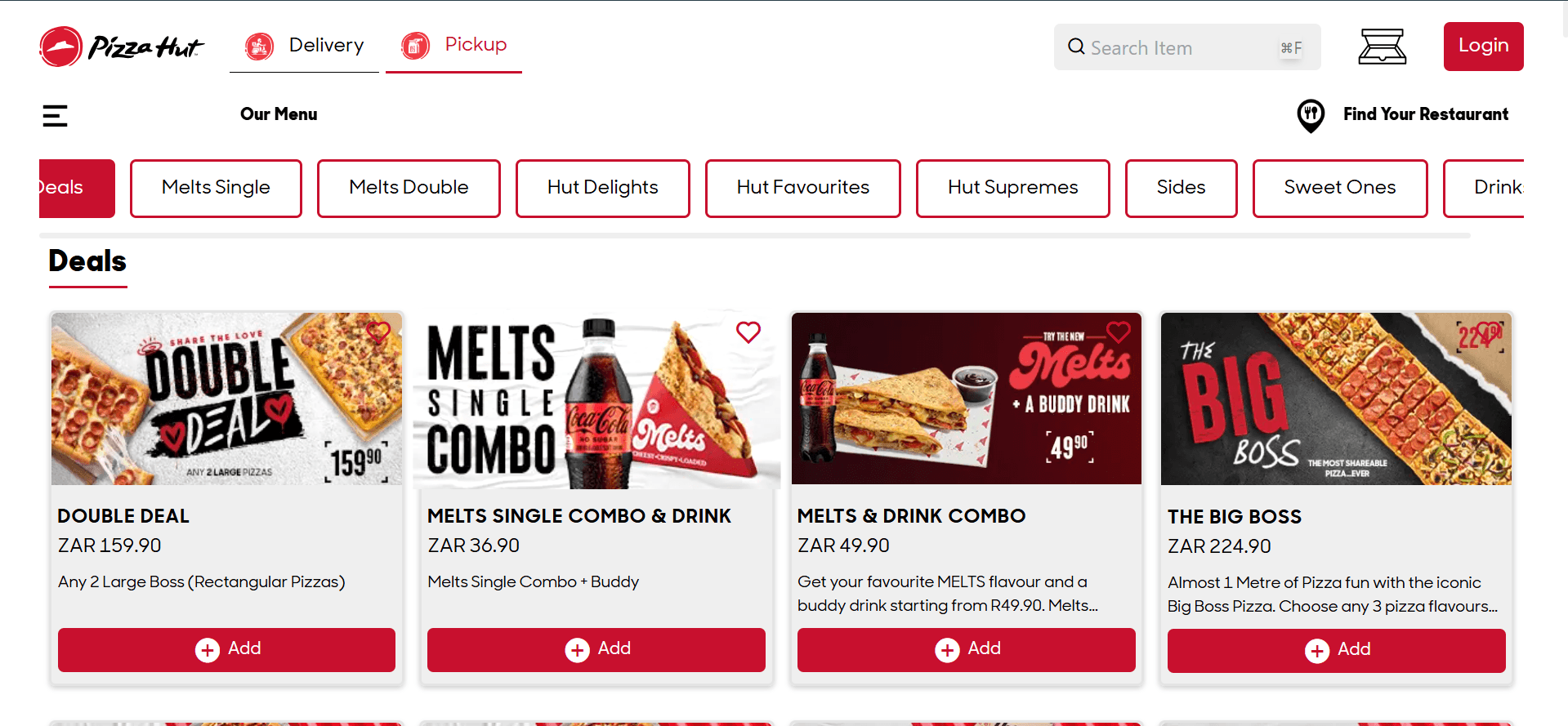
Food ordering · Web + Mobile app
Cross-market QA coverage for an international ordering ecosystem, with defect management that supports stable releases across regions.
Testing expertise
From the first requirement review to the last regression run, these are the kinds of testing I do every release.
Does the product do what the business needs?
Did this change break anything that already worked?
Is it correct beneath the UI, and does it hold up under load?
Does it work for every user, on every surface?
Experience

Dec 2022 – Present
3 yrs 10 mos
Full-time
I own QA for high-traffic food-ordering platforms and an enterprise smart-city platform, covering web and mobile apps across multiple markets. I also lead QA and Application Management Support (AMS) for Dubai South.
QA approach
This is the cycle I follow on every release, adapted to the size of the change and the risk involved.
Review FRDs and user stories and raise gaps early.
Agree on scope, risk areas, platforms and environments.
Write test cases for happy paths, negatives and edge cases.
Run functional, integration and API tests on web and app.
Log clear, reproducible defects and triage them with the team.
Verify each fix in the environment where it failed.
Confirm nothing that already worked has broken.
Validate the release and give QA approval for production.
Monitor after release and handle AMS issues.
01
Most defects begin as misunderstandings. I read the FRD and question it before I test the build.
02
Customers lose connection mid-payment, change the delivery address after checkout and order at midnight in another market. Those are the cases I go looking for.
03
I walk through the product as a customer would, then check the API responses, the data and the logs to confirm what actually happened.
04
Clear steps, evidence and the expected result mean developers spend their time fixing, not reproducing.
05
I work alongside developers and product owners, not after them. The goal is a reliable release, not a bug count.
Technical testing
These skills sit underneath the manual testing. They let me check what the UI can't show and handle repetitive checks faster.
A screen can look right while the API underneath returns the wrong data, so I validate the service layer as well.
High-traffic ordering platforms have to stay fast at peak hours. I use JMeter to see how the backend behaves before real users push it.
Automation supports my testing rather than replacing it. Its job is to make regression faster and more repeatable so I have more time for exploratory and risk-based checks.
| Tool | Area | How I use it |
|---|---|---|
| Jira | Test & defect management | Defect lifecycle, sprint boards and test tracking |
| Azure DevOps | Test & defect management | Work items, bug tracking and sprint boards (Dubai South) |
| Apache JMeter | Performance | Load testing and backend bottleneck analysis |
| Cypress | Automation | Automated regression checks for web flows |
| PlaywrightLearning | Automation | Cross-browser automation with AI-assisted testing |
| SQL | Data | Database validation and data verification |
| System & application logs | Analysis | Tracing integrations and investigating production issues |
Currently learning
Building cross-browser end-to-end automation as the next step after Cypress.
Using AI with Playwright to speed up test design, test generation and failure analysis.
Education

University of Management and Technology
2018 – 2022 · Lahore, Pakistan

Punjab Group of Colleges
2016 – 2018 · Sambrial, Pakistan
Contact
I'm open to Senior SQA Engineer roles and QA collaborations. Tell me about the product, the team and the release you're working toward.